Presses form products by exerting the necessary load on material via the dies. If the load is not transmitted appropriately, it can result in defective products and cause die damage. In this ...
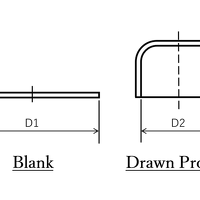
In Parts 1 and 2 of this series, we discussed the 'wrinkling suppression force' necessary to suppress wrinkling and cracking when draw-forming and how to calculate the 'appropriate number of draws....
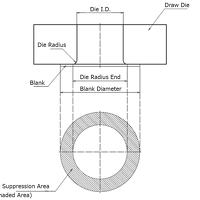
In Part 1 of this series we discussed the 'wrinkling suppression force' necessary to suppress wrinkling and cracking when draw-forming. Draw-forming is a methodology that can produce seamless, beau...
In this 3-part series we will be discussing 'draw-forming.' Drawforming is a methodology that can produce seamless, beautifully formed products, but it is very important to do calculations beforeha...
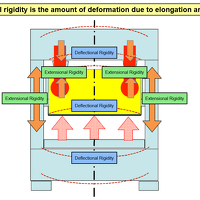
When defects are found in press-formed products and other issues such as noise and vibration occur, you have perhaps heard someone comment, 'I don't think this press is rigid.' There are also diffe...
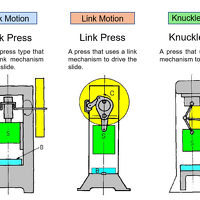
There are many different slide motions available for mechanical presses, and this blog post will explain the characteristics of each motion, the slide drive mechanisms that make these motions possi...
In our previous blog post titled "Allowable Off-Center Load Diagrams--Part ①," we talked about cases where the load center is some distance from the center of the press (i.e., there is off-center l...
In this blog post we would like to introduce you to our 'Modernization Examples Series.' We will discuss the benefits of upgrading your hydraulic pump motor to an inverter motor. What are the Advan...
This blog post is the first in our 'Safety and Effective Periodic Inspection Series.' In this initial post we will talk about the aluminum electrolytic capacitors that are used on AIDA servo presse...
In our previous blog post we discussed metalworking lubricants used for press metalforming, and in this post we will discuss "lubricants used in presses." What are "lubricants"? Lubricants provide ...